


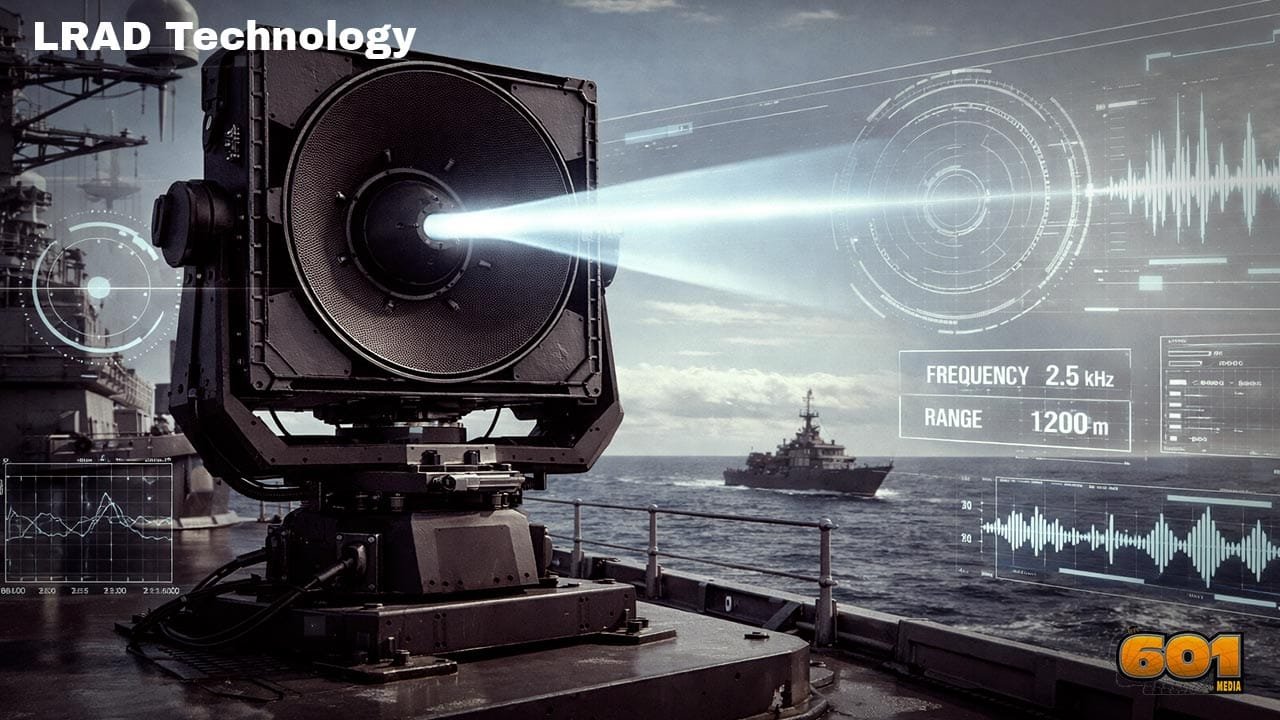
LRAD Technology for Military Use: Digital Sound Weapons and the Future of Non-Lethal Defense
LRAD technology has quietly evolved from a crowd-control novelty into a digitally driven, mission-critical military capability. By combining precision acoustics with advanced digital signal processing, modern LRAD systems give armed forces a scalable, non-lethal option for deterrence, communication, and force protection in complex operational environments.
Table of Contents
- Understanding LRAD Technology
- Military Applications of LRAD Systems
- The Digital Technology Behind LRAD
- Strategic Advantages for Modern Armed Forces
- Operational Limitations and Ethical Considerations
- The Future of Digitally Enhanced LRAD Systems
- Top 5 Frequently Asked Questions
- Final Thoughts
- Resources
Understanding LRAD Technology
Long Range Acoustic Device technology is a class of directed-energy acoustic systems designed to project highly focused sound waves over long distances. Unlike conventional loudspeakers that disperse sound broadly, LRAD systems use phased-array transducers to emit a narrow acoustic beam. This allows sound to travel farther with minimal distortion and reduced spillover into unintended areas.
Originally developed for maritime security, LRAD technology gained attention after its successful deployment against piracy and unauthorized vessel approaches. Military organizations quickly recognized its value as a non-lethal tool capable of escalating from voice commands to deterrent tones without crossing the threshold of kinetic force.
At its core, LRAD serves two fundamental purposes: long-distance intelligible communication and area denial through sound pressure. What differentiates modern LRAD platforms from early models is the deep integration of digital technologies that enhance control, precision, and adaptability in real-time combat scenarios.
Military Applications of LRAD Systems
LRAD systems are now used across multiple branches of the armed forces, particularly in environments where rules of engagement restrict lethal force. One of the most common military applications is perimeter defense at forward operating bases. LRAD units provide early warning, verbal escalation, and non-lethal deterrence against approaching threats.
Naval forces employ LRAD technology extensively for maritime interdiction. The ability to issue clear commands across hundreds or even thousands of meters is critical in contested waters. Digitally enhanced LRAD systems allow operators to switch instantly between multilingual voice warnings and deterrent acoustic tones, reducing reaction time during high-risk encounters.
Urban operations represent another key use case. In dense civilian environments, commanders require tools that can influence behavior without causing permanent harm. LRAD fills this gap by enabling precise directional sound projection, minimizing collateral impact while maintaining tactical effectiveness.
Peacekeeping missions, checkpoint operations, crowd dispersion, and convoy protection further highlight LRAD’s versatility. In each scenario, digital control systems allow operators to modulate output levels based on threat assessment, ensuring proportional response.
The Digital Technology Behind LRAD
The most transformative aspect of modern LRAD systems lies in their digital architecture. Unlike analog acoustic devices, LRAD platforms rely on advanced digital signal processing to shape, amplify, and direct sound waves with extreme accuracy.
Digital signal processors manage frequency modulation, amplitude control, and beamforming algorithms. This enables the system to optimize sound clarity over distance while compensating for environmental factors such as wind, temperature, and terrain. Operators can adjust output parameters through digital interfaces, often integrated into broader command-and-control systems.
Many military LRAD units now feature onboard computing modules that store pre-programmed audio files, multilingual voice commands, and mission-specific deterrent signals. These digital libraries reduce cognitive load on operators and ensure consistent messaging during high-stress situations.
Network connectivity is another major advancement. Digitally networked LRAD systems can interface with surveillance sensors, radar systems, and unmanned platforms. When paired with threat detection systems, LRAD units can be automatically cued to issue warnings or deterrent signals, creating a semi-autonomous defensive layer.
Cybersecurity has also become a design priority. Military-grade LRAD platforms employ encrypted firmware and secure communication protocols to prevent signal spoofing or unauthorized access. This ensures system integrity in contested electromagnetic environments.
Strategic Advantages for Modern Armed Forces
From a strategic perspective, LRAD technology offers militaries a scalable response option that aligns with modern doctrines emphasizing restraint and precision. Digitally controlled sound projection allows forces to communicate intent clearly before escalating to force, reducing misunderstandings that can lead to unnecessary conflict.
One key advantage is psychological dominance without physical destruction. Directed sound can disorient, deter, and influence behavior without creating lasting injuries when used within operational guidelines. This is particularly valuable in hybrid warfare environments where adversaries blend with civilian populations.
LRAD systems also provide logistical benefits. Compared to kinetic weapons, they require minimal resupply and maintenance. Software updates can enhance performance without hardware replacement, extending system lifecycle and reducing total cost of ownership.
Interoperability further strengthens LRAD’s appeal. Digital interfaces allow integration with battlefield management systems, enabling commanders to coordinate acoustic deterrence with visual warnings, drones, and electronic warfare assets.
Operational Limitations and Ethical Considerations
Despite its advantages, LRAD technology is not without limitations. Environmental conditions can affect sound propagation, and complex urban landscapes may reduce effective range. Digital compensation algorithms mitigate these issues but cannot eliminate them entirely.
Ethical concerns also persist. Excessive exposure to high-intensity sound can cause temporary or permanent hearing damage. Military organizations must enforce strict usage protocols, training standards, and rules of engagement to prevent misuse.
From a technological standpoint, reliance on digital systems introduces vulnerabilities. Power supply disruptions, electromagnetic interference, or cyber threats could degrade performance. As a result, redundancy and hardening are critical elements of military LRAD deployment.
The Future of Digitally Enhanced LRAD Systems
The future of LRAD technology for military use is closely tied to advances in artificial intelligence and autonomous systems. Emerging concepts include AI-driven threat assessment engines that adjust acoustic output dynamically based on crowd behavior and threat escalation models.
Machine learning algorithms may further improve speech intelligibility by adapting sound profiles in real time. Integration with autonomous vehicles and unmanned surface vessels is already underway, expanding LRAD’s role beyond static defense into mobile and remote operations.
As non-lethal capabilities gain strategic importance, LRAD systems will likely become standard components of layered defense architectures. Their digital foundations make them uniquely adaptable to future operational demands, ensuring relevance in an increasingly complex battlespace.
Top 5 Frequently Asked Questions
Final Thoughts
LRAD technology represents a critical shift in how militaries approach deterrence and communication. Its digital core transforms sound into a precision tool, enabling proportional response in environments where traditional weapons fall short. As armed forces adapt to increasingly complex operational landscapes, digitally enhanced LRAD systems will play a central role in bridging the gap between communication and force.
Resources
- Joint Non-Lethal Weapons Directorate publications
- Defense research on directed energy and acoustic systems
- Military technology journals on digital signal processing

I am a huge enthusiast for Computers, AI, SEO-SEM, VFX, and Digital Audio-Graphics-Video. I’m a digital entrepreneur since 1992. Articles include AI assisted research. Always Keep Learning! Notice: All content is published for educational and entertainment purposes only. NOT LIFE, HEALTH, SURVIVAL, FINANCIAL, BUSINESS, LEGAL OR ANY OTHER ADVICE. Learn more about Mark Mayo