

Digital Technology: Past Foundations and Future Frontiers
A clear-eyed exploration of how digital technology emerged, how it reshaped industries, and where it is headed next, with strategic insights for leaders navigating accelerating technological change.
Table of Contents
- The Origins of Digital Technology
- The Internet and Platform Revolution
- Mobile, Cloud, and Data Explosion
- Enterprise and Economic Transformation
- Emerging Digital Technologies
- The Future of Digital Technology
- Ethics, Regulation, and Trust
- Frequently Asked Questions
- Final Thoughts
- Resources
The Origins of Digital Technology
Digital technology began as a response to limitations in analog systems. Early computation relied on mechanical and electromechanical devices, but the invention of the transistor in 1947 marked a decisive turning point. Transistors replaced vacuum tubes, drastically improving reliability, size, and energy efficiency.
The arrival of integrated circuits in the late 1950s laid the groundwork for modern computing. Moore’s Law, articulated by Gordon Moore in 1965, observed that the number of transistors on a chip would double approximately every two years. This prediction held true for decades and became a self-reinforcing innovation target for the semiconductor industry.
Mainframe computers dominated early digital adoption, serving governments, research institutions, and large corporations. These systems were expensive, centralized, and operated by specialists, which limited widespread access but established the first digital operating models.
The Internet and Platform Revolution
The transition from isolated computing to connected systems redefined digital technology’s role in society. Originally developed as ARPANET, the internet evolved into a global communication infrastructure by the 1990s.
The introduction of the World Wide Web transformed static data sharing into interactive digital experiences. Organizations like Microsoft and Apple capitalized on this shift by building software ecosystems and user-friendly interfaces that accelerated adoption.
By the early 2000s, digital platforms emerged as dominant economic structures. Search engines, online marketplaces, and social networks shifted value creation from ownership to orchestration. Platform economics favored scale, network effects, and data-driven optimization, fundamentally altering competitive dynamics across industries.
Mobile, Cloud, and Data Explosion
The introduction of smartphones represented another structural inflection point. Computing became personal, mobile, and continuous. Devices evolved into sensors, capturing location, behavior, and contextual data at unprecedented scale.
Cloud computing removed capital barriers to innovation. Instead of building physical infrastructure, organizations could rent computing power on demand. This shift enabled startups to compete globally while allowing enterprises to modernize legacy systems.
Simultaneously, data volumes grew exponentially. According to IDC estimates, global data creation surpassed 120 zettabytes annually by the early 2020s. Data became a strategic asset, driving analytics, personalization, and automation across sectors such as healthcare, finance, and manufacturing.
Enterprise and Economic Transformation
Digital technology reshaped how organizations create value. Traditional linear value chains gave way to digital value networks. Automation reduced transaction costs, while software-driven coordination improved speed and scalability.
Industries once considered immune to disruption experienced rapid transformation. Retail shifted toward omnichannel commerce. Manufacturing adopted smart factories using connected sensors and predictive maintenance. Financial services embraced digital payments and algorithmic risk assessment.
From a management perspective, digital transformation became less about technology deployment and more about organizational capability. Firms that aligned leadership, culture, and incentives around digital innovation consistently outperformed peers. Research from MIT Sloan shows digitally mature organizations are 26 percent more profitable than less mature competitors.
Emerging Digital Technologies
Several technologies are defining the current digital frontier. Artificial intelligence moved from experimental to operational, with machine learning systems embedded in everyday decision-making. Generative models expanded digital creation, enabling rapid content, code, and design generation.
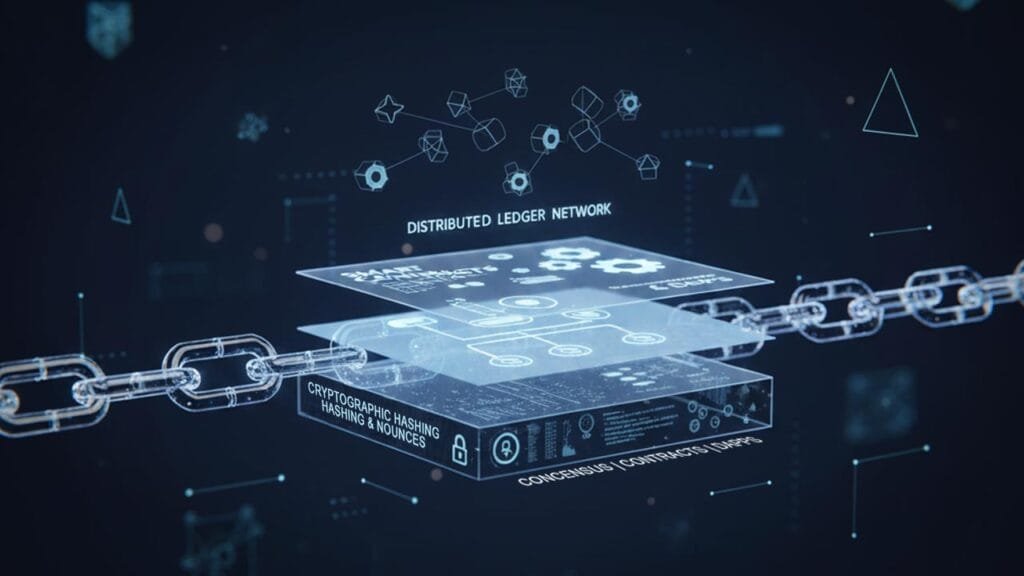
Blockchain introduced decentralized trust mechanisms, challenging centralized intermediaries. While adoption remains uneven, use cases in supply chain transparency and digital identity continue to mature.
Extended reality technologies blend physical and digital environments, supporting training, design, and remote collaboration. Meanwhile, edge computing processes data closer to where it is generated, reducing latency and enabling real-time applications such as autonomous systems.
These technologies share a common trait: they amplify decision speed and complexity, increasing the strategic importance of governance and integration.
The Future of Digital Technology
The future of digital technology will be shaped by convergence rather than isolated breakthroughs. AI, cloud, quantum computing, and advanced networks will increasingly operate as integrated systems.
One likely scenario is ambient computing, where digital services fade into the background and respond proactively to human needs. Another is the rise of autonomous organizations, where algorithms manage workflows, resources, and optimization with minimal human intervention.
Productivity gains will be unevenly distributed. Knowledge-intensive roles may be augmented, while routine cognitive tasks face displacement. The long-term economic impact will depend on reskilling systems, institutional adaptation, and inclusive innovation strategies.
Ethics, Regulation, and Trust
As digital systems gain influence, ethical and regulatory considerations move from the margins to the core of innovation strategy. Data privacy, algorithmic bias, and cybersecurity represent systemic risks.
Governments are responding with new frameworks such as the EU AI Act, signaling a shift toward proactive regulation. Organizations must balance compliance with agility, embedding responsible design principles early in development.
Trust will emerge as a competitive differentiator. Companies that demonstrate transparency, security, and ethical stewardship are more likely to sustain long-term adoption and brand loyalty.
Top 5 Frequently Asked Questions
Final Thoughts
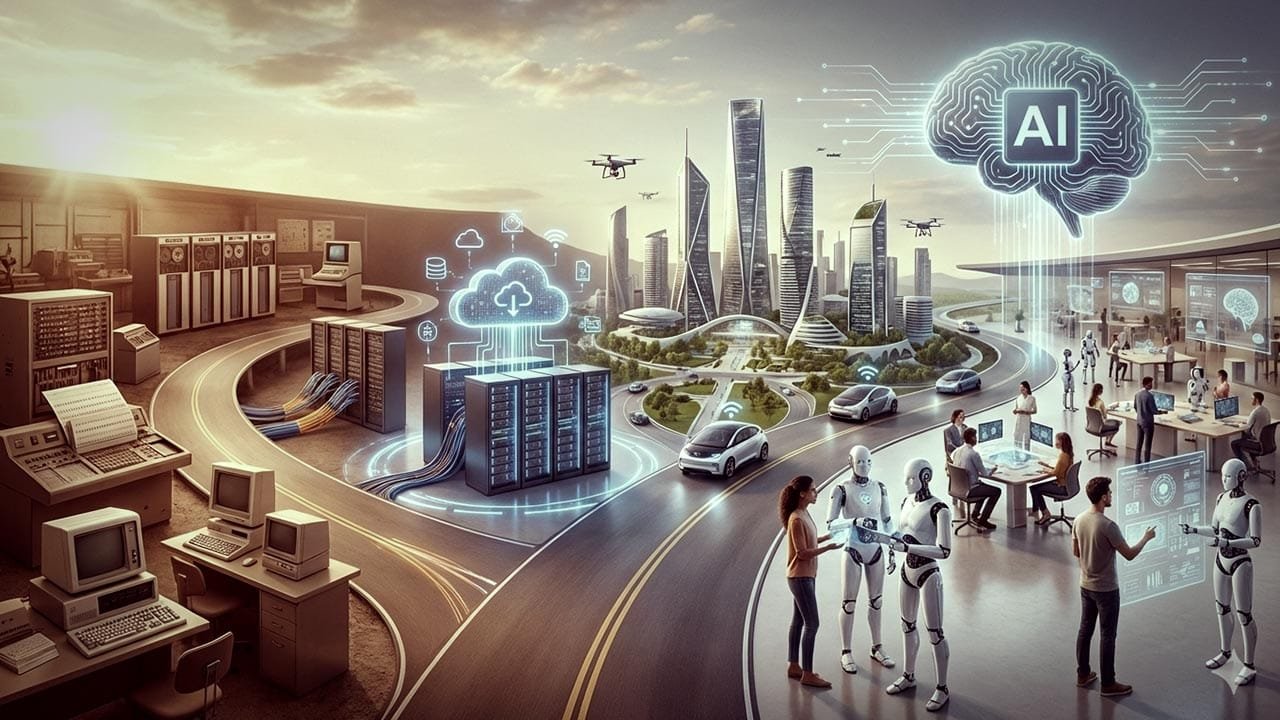
Digital technology is not a linear story of progress but a sequence of compounding transformations. Each wave builds on prior foundations while redefining economic structures, organizational models, and societal norms. The most important takeaway is that technology alone does not create advantage. Advantage emerges when digital tools are aligned with strategy, culture, and responsible governance. Organizations that treat digital technology as a dynamic capability rather than a one-time investment will be best positioned to shape, rather than react to, the future.
Resources
- MIT Sloan Management Review – Digital Transformation Research
- IDC Global DataSphere Reports
- OECD Digital Economy Outlook
- World Economic Forum – Future of Jobs Reports

I am a huge enthusiast for Computers, AI, SEO-SEM, VFX, and Digital Audio-Graphics-Video. I’m a digital entrepreneur since 1992. Articles include AI assisted research. Always Keep Learning! Notice: All content is published for educational and entertainment purposes only. NOT LIFE, HEALTH, SURVIVAL, FINANCIAL, BUSINESS, LEGAL OR ANY OTHER ADVICE. Learn more about Mark Mayo